Lasermed has been offering aesthetic and sexual health medicine at our Tyger Valley branch since last year. This is in line with our philosophy that physical and mental well-being go hand in hand with our renowned laser and rejuvenation treatments,
Dr Heather Blaylock offers a range of botox, dermal fillers, silhouette soft- & sclerotherapy plus other modalities to restore your natural beauty. With an eye for aesthetics, she focuses on arresting and reversing the visible signs of facial ageing, as well as the sexual health concerns of both men and women.
A member of the Aesthetic & Anti-Ageing Medicine Society of SA, the South African Sexual Health Association, the European Society of Sexual Medicine and a Fellow of the Multidisciplinary Joint Committee of Sexual Medicine, she graduated with an MBBCh from the University of Witwatersrand, followed by extensive aesthetic training.
Aesthetic medicine not only eliminates cosmetic defects but treats the whole person, achieving a state of complete well-being physically, socially and mentally.
To book an appointment with Dr Blaylock, phone Chantelle or Lisa on 021 9146006
Discolouration of the neck, known as Poikiloderma of Civatte, is common in men and women. It’s caused by sun exposure and applying fragrance to the neck. Usually, it’s more prominent on a person’s right side (the driving side). Essentially, it’s a mixture of pigmentation and blood vessels. After 2 treatments with the Ellipse Nordlys IPL System by Lasermed’s Suzette La Grange, this is the excellent result.
Winter is a good time to think about having an Intense Pulsed Light (IPL) Photorejuvenation treatment if you have:
1. Sun damage (freckles and sunspots)
2. Redness (broken capillaries, diffused redness, rosacea)
3. Poikiloderma (sun damage on the neck and chest area)
4. Fine lines, wrinkles and dilated pores
I have been using Ellipse, Specific Waveband Technology, which enables me to customise every treatment to the client’s specific skin needs. When deciding to go for a photo rejuvenation treatment, it is important that you use a high sun protection for four weeks prior to your treatment. If your skin is tanned, it can’t be treated.
IPL treatments can make the skin sensitive to the sun, so continue using your sunblock for at least a month after each treatment.
Sometimes, multiple treatments are required and your results will have to be maintained by repeated sessions in future.
I recommend an initial course of 2 to 4 treatments, according to the client’s skin needs, with a monthly interval between sessions. One to two sessions a year are required to maintain the results, depending on the skin condition. – by Suzette la Grange.
Vitamin C is one of the naturally occurring antioxidants in the skin. Most plants and animals can synthesise Vitamin C, but humans can’t. Therefore we have to acquire it from food sources such as citrus, green leafy vegetables, strawberries, papaya and broccoli, to name but a few.
In the skin, Vitamin C acts as an antioxidant by neutralising free radicals. Vitamin C also directly activates collagen synthesis. It is clinically proven that Vitamin C increases collagen production in both young and aged human skin.
Vitamin C is also a depigmenting agent. It’s known as a tyrosinase inhibitor, thereby decreasing melanin (dark pigment) formation.
What to look out for when buying a Vitamin C serum?
1. Make sure it’s a concentration of 10% or higher (for maximum efficacy)
2. Vitamin C must be stored in a tinted glass bottle to keep the ingredients stable.
Personally, I like to use a Vitamin C serum in the morning on a clean dry skin, beneath my moisturiser and sunblock. – by Suzette la Grange
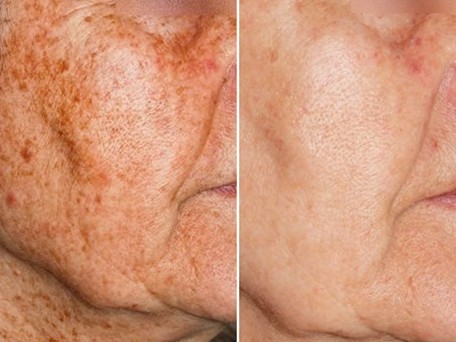
Effectively reducing the visible signs of photo-ageing and sun damage in men and women of all ages, IPL Photo Rejuvenation is simply so worth it! This non-invasive, restorative laser treatment reconditions your skin with a decidedly youthful glow. Better yet, pores are refined, lines and wrinkles softened, skin tightened, sun spots removed, Rosacea is reduced and broken facial veins are targeted. And to crown it all, there’s no downtime.
Specials for May, June & July 2019:
Face R2 200 (save R200)
Face & neck R2 900 (save R500)
Face, neck & chest R3 400 (save R600)
Hands with other areas R800 (save R800)
Hands IPL & ETCA peel R1 800 (save R300)
Lasermed Tyger Valley, ph 021 9146006, skinlaser@mweb.co.za;
Lasermed City Bowl, ph 021 4245078, skinlasercb@mweb.co.za
I’m sure you’ve been told, ‘You need to use an anti-oxidant on the skin to protect you against free radicals….’ But what are free radicals and how do they harm your skin?
According to Rice University, a free radical is a single atom, with an unpaired electron. Electrons like to be in pairs, so these atoms seeks out other electrons so that they can become a pair. The first free radical pulls an electron from a molecule, which destabilises the molecule and turns it into a free radical. That molecule then takes an electron from another molecule, destabilising it and turning it into a free radical. This domino-effect can eventually disrupt and damage the whole cell.
“The free radical theory of ageing states that we age because of free radical damage over time.” It can lead to a damaged DNA instructional code, causing our new cells to grow incorrectly, leading to ageing.
External factors such as sunlight, pollution and smoking can increase free radical activity on the skin. The best way, besides using a good quality sunblock to protect the skin against the sun, is to apply an antioxidant to the skin daily.
by Suzette la Grange, Lasermed City Bowl. Image: medicalxpress.com