The tattoo you got when you were 18 doesn’t seem like such a great idea now that you’re 35+ – especially if you have a professional job.
Even though you may have regrets about said tattoo, you may be even more apprehensive about having your ink art removed.
But French scientists have made a discovery that may make tattoo removal easier in the future. A study published in the Journal of Experimental Medicine explains why tattoo ink isn’t sloughed away with the dead skin cells we all lose each day as our top layer regenerates. The researchers found that the skin cells that make tattoos permanent by hanging on to pigment pass the ink on to new cells when they die, STAT reported.
Scientists who tattooed mice found that macrophages in the skin, immune cells that absorb invading microbes, swallow up and hold on to tattoo pigments. But even when they killed the inked cells, the tattoos still looked the same.
That’s because when the macrophages die, they release the tattoo ink and neighbouring cells gobble it up, the researchers discovered. And understanding this continuous cycle of pigment capture, release, and recapture could lead to developing better tattoo removal methods.
At Lasermed, tattoos can be removed using Q Switched ND YAG – the only one in Cape Town. Undesirable tattoos can now be effectively removed without scar formation or pigmentary changes. Black, blue and green respond well. Red, orange and yellow may fade.
Three to 15 treatments are needed, although one cannot guarantee complete removal of a tattoo.
Suzette la Grange’s beautiful skin is thanks to regular chemical peels, Dermapen and IPL: She said, “To treat my epidermis, I like to do Chemical Peels. These peels exfoliate the dead skin cells to reveal fresher looking skin, enhance cell turnover and encourage anti-ageing effects. I have been doing peels on my skin for 16 years and it forms an essential part of my skin care routine.
“For my dermal layer I prefer Dermapen treatments. It is a wonderful way of stimulating your skin to create its own collagen helping to reduce fine lines and wrinkles. I have at least four Dermapen treatments per year. Once a year I also enjoy having an Intense Pulse Light (IPL) treatment to reduce any redness or sun damage (sunspots) that may have surfaced. This helps to even out my skin tone as well as stimulating collagen production.
“Please remember that changes do not happen overnight thus my philosophy to look after your skin is: Perseverance is key.
“Product-wise, I use: Obagi 15% Vitamin C Serum – an amazing antoxidant; NeoStrata Skin Active Retinol – the benefits of Vitamin A for my skin includes: Reduction in photo-ageing; smoothing of fine lines and wrinkles and increased firmness of my skin. I apply this to my cleansed skin in the evening underneath my facial cream; NeoStrata Bionic Face Cream – an absolute must for my skin! Bionic Face Cream contains Gluconolactone and Lactobionic Acid. I always had a very dry skin and this is a very rich emollient cream that repairs my skin barrier, decreasing trans epidermal water loss. It also lightly exfoliates my skin to restore texture without irritation, while improving clarity and diminishing the appearance of lines and wrinkles.
“Lastly, SUNBLOCK! I never leave my house without first applying my sun protection. I use Heliocare tint on my face when I need a bit of coverage and Heliocare spray on my face and body.”
The laser light is directed at and gets absorbed by the pigment in the hair itself, which sits in the hair follicle. When the laser light gets absorbed, it creates heat. If enough heat is generated down the hair follicle, it will destroy the hair growth centre in the follicle. If the hair growth centre is destroyed, you should not create a new hair.
Body hair goes through a resting and growth cycle, which is why a series of follow-up treatments are scheduled every 4-6 weeks.
When the hair is in a resting portion of the cycle, it may not be able to absorb enough laser light or generate enough heat to destroy the hair growth centre. This means is that you have to laser multiple times -– usually about 6 sessions ― to remove a substantial portion of the hair from an area.
Lasermed uses the gold standard Alexandrite and ND:Yag hair removal lasers. Treatments are simple and virtually painless on any skin pigment. We also offer a free patch test. During April, Lasermed is offering 15% off on the quoted price for laser hair removal.
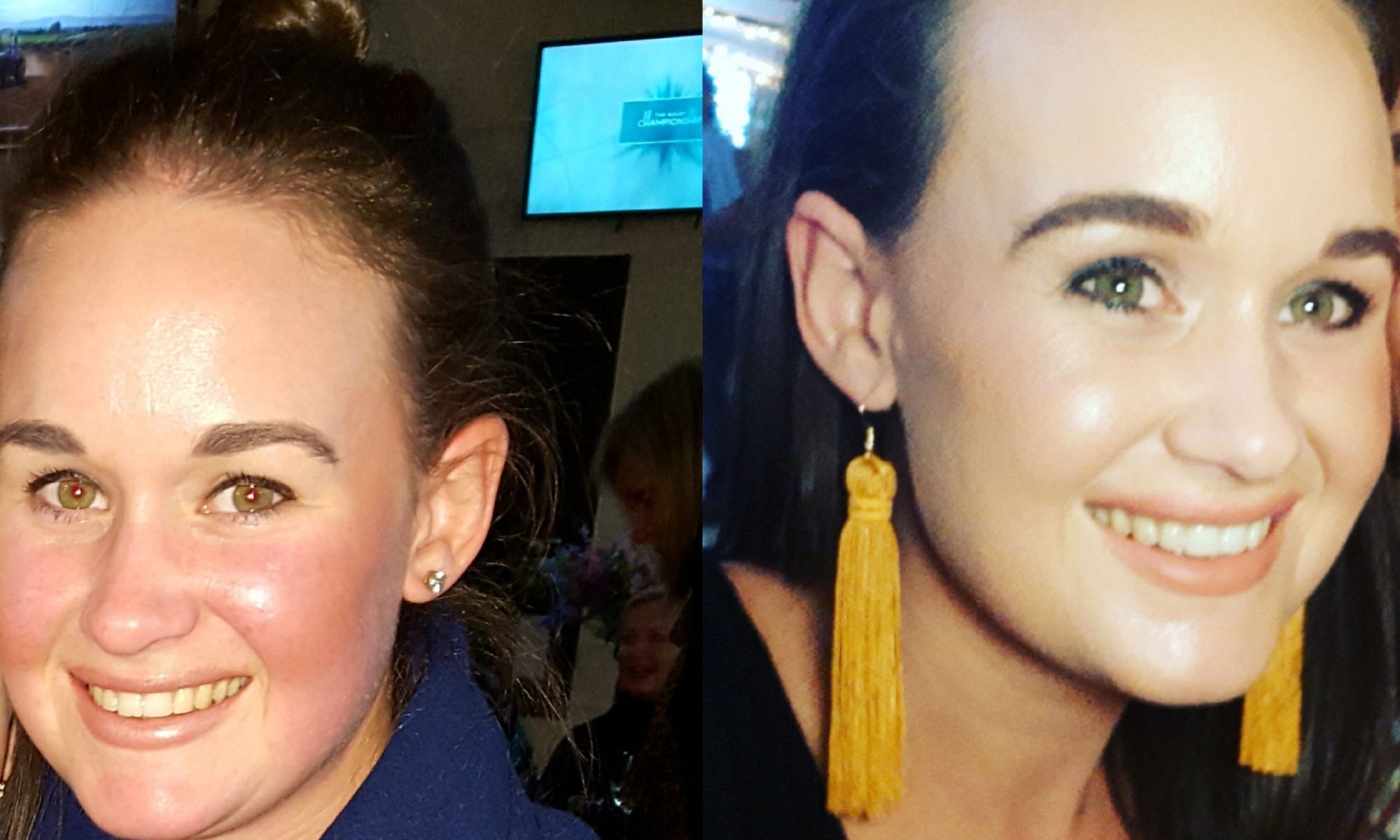
Maggie Botha was first diagnosed with Rosacea at the age of 27. Dermatologist Dr Lizmare Brönn referred her to Lasermed in 2017. Now entering her second year of three IPL sessions per year, Maggie has had the most incredible result. The visible redness is gone, no more broken facial veins and her complexion is more even. Together with the IPL, Maggie started using the NeoStrata skincare range (specifically the Bio-Hydrating Cream). She commented that this was a must for every Rosacea patient. “Lasermed and Penny Jenkinson have changed my life!”
Spider angiomas are a type of telangiectasias found slightly beneath the skin surface, often containing a central red spot and reddish extensions which radiate outwards like a spider’s web. They are common and may be benign, presenting in around 10–15% of healthy adults and young children.
Spider angiomas form due to failure of the muscle surrounding and serving to guard or close an opening or tube. The central red dot is the dilated arteriole and the red “spider legs” are small veins carrying away the freely flowing blood. If temporary pressure is applied, it is possible to see the emptied veins refilling.
Professional treatments are available at Lasermed with the Intense Pulse Laser (IPL) or Vascular Laser.
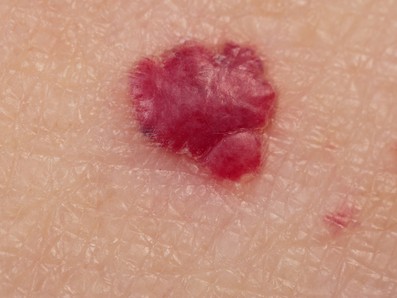
Red moles, or cherry angiomas, are common skin growths that can develop on most areas of your body. They’re also known as senile angiomas or Campbell de Morgan spots. They’re usually found on people aged 30 and older. The collection of small blood vessels inside a cherry angioma give them a reddish appearance – it is a cherry red to purple papule on the skin containing a clustered of blood vessels. They are almost flat, appearing as a small red dot. However, they do tend to expand in thickness.
Cherry angiomas are hereditary and occur mainly on the abdomen. The frequency of cherry angiomas increases with age. They are harmless and have no relation to cancer at all.
Treatment is available at Lasermed with the Intense Pulse Laser (IPL) or Vascular Laser. The laser energy heats the vascular source that feeds the lesion, thereby destroying it. By using the correct laser, which only targets hemoglobin (blood) there are no negative effects on the surrounding skin. It is a non-ablative treatment so no downtime is required.