Lasermed: Laser Clinic & facial rejuvenation
  • Treatmentsskip-track2
    • Fractional Resurfacing Laser
    • Intense Pulsed Light (IPL)
    • Chemical Peels
    • Dermapen 4 Advanced Skin Needling
    • Hair Removal
    • Tattoo Removal
    • CO2 Fractional Resurfacing
    • Microdermabrasion
    • Pigmented Lesion Removal
    • Skin Tightening
    • Vascular Lesion Removal
    • Vitiligo Treatmentskip-track2
      • Other Treatmentsskip-track2
        • Botox®
        • Fillers
        • Sclerotherapy
  • Solutionsskip-track2
    • Treatment Options
    • Laser Safety
  • Our Storyskip-track2
    • Overview
    • Our People
    • Treatments Per Branch
    • Products
  • Trendingskip-track2
    • Expert Articles
    • Latest News
  • Special Offers
  • Touch Base
149852
HomeBlog Posts
30Apr

Free radicals

by Lasermed

I’m sure you’ve been told, ‘You need to use an anti-oxidant on the skin to protect you against free radicals….’ But what are free radicals and how do they harm your skin?

According to Rice University, a free radical is a single atom, with an unpaired electron. Electrons like to be in pairs, so these atoms seeks out other electrons so that they can become a pair. The first free radical pulls an electron from a molecule, which destabilises the molecule and turns it into a free radical. That molecule then takes an electron from another molecule, destabilising it and turning it into a free radical. This domino-effect can eventually disrupt and damage the whole cell.

“The free radical theory of ageing states that we age because of free radical damage over time.” It can lead to a damaged DNA instructional code, causing our new cells to grow incorrectly, leading to ageing.

External factors such as sunlight, pollution and smoking can increase free radical activity on the skin. The best way, besides using a good quality sunblock to protect the skin against the sun, is to apply an antioxidant to the skin daily.

  • by Suzette la Grange, Lasermed City Bowl. Image: medicalxpress.com
24Apr

Good news for chemical peels on darker skin

by Lasermed

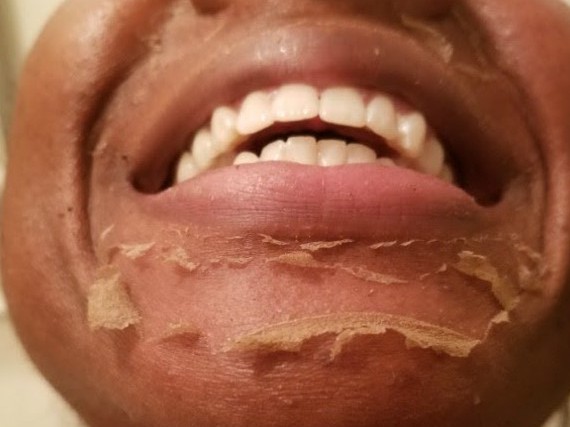
Dermatologists have given the nod to chemical peels on people with dark skin. According to research at Boston Medical Center in the US, dark-skinned people who have peels experience unwanted side-effects only 4% of the time.

Reporting their findings in the Journal of the American Academy of Dermatology, the doctors said they also observed a lower rate of side-effects compared to previous studies that included all skin types. Chemical peels are used to treat acne, premature ageing, plus dark or light spots on the skin. Side-effects include swelling, crusting, reddening, acne and pigmentation changes.

Researchers in Boston followed 132 patients with darker skin who received a total of 473 chemical peels. The same dermatologist performed all the peels, each of which was applied all at once, rather than on section of the skin. 18 participants experienced side-effects, the most common being crusting, dark spots and reddening. The side-effects lasted an average of four-and-a-half weeks.

“These findings should give some assurances to people with darker skin who are considering a chemical peel,” said lead researcher Neelam Vashi. “People with darker skin have long been under-represented in dermatological research, an it’s important to make sure we know how safe and effective these treatments are for them.”

The study also found that side-effects were least likely to occur in winter, which could be attributed to limited sun exposure. People with the darkest skin tones were most likely to experience side-effects and complications. – Article by Dave Chambers. Image: YouTube

17Apr

Your phone is giving you tech neck

by Lasermed

Yes, we can’t live without our phones, but in an ironic twist, it’s also taking a toll on our skin.

Dermatologists report that excessive cell phone use is accelerating the age at which younger people develop problems such as sagging jaw lines and wrinkled skin around the chest, in a condition called tech neck.

Tech neck includes symptoms from neck and shoulder pain, stiffness and tingling in the arm, as well as cosmetic issues such as a sagging jawline and jowls, a double chin and a wrinkled chest area. This is due to constant stress on the neck by keeping it bent at a 45-degree angle while looking down at the phone screen, resulting in laxity and drooping muscles in the thin skin of the neck and chest.

For sagging jawlines, the best way forward is Ultherapy, a treatment using ultrasound waves to stimulate the production of collagen, which keeps skin taut and lifted. For more information or a free consultation, phone Lasermed.

Wrinkled skin can be addressed with several treatments: chemical peels, IPL, fractional laser therapy, CO2 Fractional Resurfacing, or Dermapen needling, supplemented with products containing retinols.

However, prevention is the best cure. Set a screen time limit, using apps to limit the time you spend on the phone. Hold your phone up to eye level instead of bending your neck. Get up and walk around every 15-30 minutes instead of sitting in the same position, giving your neck muscles a break.

1Apr

EXPERIENCE A DAY WITH SKINCEUTICALS: 25 April 2019

by Lasermed

Book the following Skin Rejuvenation treatment with a SkinCeuticals Professional:

Pigment Balancing Peel: R800 (Brightens and lightens pigmentation, age spots and uneven skin texture)

TREATMENT DISCOUNTS AND FREE GIFTS

* Receive a complimentary Skin Scope Skin Analysis as well as a customised 3-day post care skincare pack.

* Receive 5% discount on SkinCeuticals home care products

(valid for 25 April 2019 only at Lasermed)

16Mar

Good news for bad skin (possibly)

by Lasermed

Fixing the gut microbiome has been linked to a wide range of health benefits and much of skin care, the beauty category most affected by wellness trends, is now focused on the gut as the secret to complexion perfection.

So comes a wave of designer probiotic pills and powders that suggest they can do a lot of the heavy lifting of that gut fixing for you.

In London and Los Angeles some supplements are outselling serums and other formerly top-selling products, according to an article in the NY Times.

Unfortunately, cleaning up your gut (and your skin) isn’t as simple as swallowing a probiotic. Not yet, anyway.

There are small studies associating certain strains of bacteria with acne reduction, skin hydration and elasticity. For example, one called lactobacillus casei subsp. casei 327 (or L. K-1 for short) seems to improve the skin barrier and reduce flakiness, according to a 2017 Japanese study. Another strain, lactobacillus rhamnosus SP1, has been linked to a reduction in adult acne, reported in a 2016 study.

But it’s not even well established that a strong stomach, bacterially speaking, is the secret to clear skin. We don’t know precisely what the mechanistic connections are between the gut microbiome and the skin, said Justin Sonnenburg, an associate professor of microbiology and immunology at Stanford University School of Medicine, who studies gut microbiota.

It is certainly true that what happens in the gut isn’t confined to the gut, he said — that it’s part of the integrated system that is you. Your gastrointestinal micro-organisms affect metabolism, immune response, stress. Change something in the gut microbiome — diet is one of the most powerful levers for that — and the effects ripple outward, potentially to the skin.

But there aren’t any good studies that assess in a systematic, controlled way whether changing the gut microbiome influences skin health, Dr. Sonnenburg said. It’s a further leap to say you can take a probiotic that will have an impact on your gut microbial community in a way that then changes your skin health.

“Big promises have come too fast,” Dr. Belkaid said. “But in the next 10 to 15 years there could be some very impressive products on the market.”

And although the acne working group of the American Academy of Dermatology set forth diet guidelines for treatment for the first time ever in 2016, it stopped short of including probiotics, noting, “the existing evidence is not strong enough to support any recommendations.”

One problem with the current probiotics is that everyone’s gut microbiome is different. Add to that the variations in each person’s immune system and skin microbiome (the distinct community of critters that reside in the skin), and what it means is that whether a given probiotic will flourish — and then have an effect — is a bit of a lottery. – NY Times.

16Mar

Save face by cutting back on selfies

by Lasermed

Dermatologists now believe that exposing the face regularly to the light and electromagnetic radiation from smartphones can damage the skin. Doctors claim they can even tell in which hand a person holds their phone from which side of the face looks most damaged.

London-based Dr Simon Zoakel said, “Those who take a lot of selfies and bloggers should worry. Even the blue light we get from our screens can damage our skin. I think there’s a gap in the market for products which protect. People who take lots of selfies and bloggers come to me and I’ve seen there’s damage and ageing taking place.

“It’s a different wavelength so sunscreen won’t block it.”

Dr Zein Obagi, of the Obagi Skin Health Institute in Beverley Hills said, “Your cellphone will damage your skin. It’s not documented, but in my clinical observation I can tell whether someone uses their right or left hand to hold their phone. You start seeing a dull texture.” – The Daily Telegraph, London.

  • right-arrow2
  • 1
  • …
  • 25
  • 26
  • 27
  • 28
  • 29
  • …
  • 44
  • right-arrow

Date Posts

April 2026
M T W T F S S
 12345
6789101112
13141516171819
20212223242526
27282930  
« Jul    

Tags

Acne acne scars Ageing skin Alexandrite laser anti-ageing Chemical peels Dermapen fine lines and wrinkles Fractional laser Frax 1550 glycolic acid peel hair loss hyperpigmentation IPL laser hair removal Lasermed lasermedbeautifulskin Microdermabrasion Microneedling Mini Frax 1550 moisturiser pigmentation port wine stains Post-traumatic scarring Q-switched laser Q Switched ND:Yag laser Rejuvenation sagging skin skin cancer prevention Skincare skin hydration skin rejuvenation skin tightening Smoother skin solar lentigos Spider veins sunscreen sunscreen mistakes sunspots sun spots Tattoo removal Telangiectasias Utims HIFU vascular laser wrinkles

Blog Posts

Set post(s) as "Featured" to see block

Archives

  • July 2023
  • June 2023
  • May 2023
  • April 2023
  • March 2023
  • February 2023
  • January 2023
  • December 2022
  • November 2022
  • October 2022
  • September 2022
  • August 2022
  • July 2022
  • June 2022
  • May 2022
  • April 2022
  • March 2022
  • February 2022
  • January 2022
  • December 2021
  • November 2021
  • October 2021
  • September 2021
  • August 2021
  • July 2021
  • June 2021
  • May 2021
  • April 2021
  • March 2021
  • February 2021
  • January 2021
  • December 2020
  • November 2020
  • October 2020
  • September 2020
  • August 2020
  • July 2020
  • June 2020
  • May 2020
  • April 2020
  • March 2020
  • February 2020
  • January 2020
  • December 2019
  • November 2019
  • October 2019
  • September 2019
  • July 2019
  • June 2019
  • May 2019
  • April 2019
  • March 2019
  • February 2019
  • January 2019
  • December 2018
  • November 2018
  • October 2018
  • September 2018
  • August 2018
  • July 2018
  • June 2018
  • May 2018
  • April 2018
  • March 2018
  • February 2018
  • January 2018
  • November 2017
  • October 2017
  • September 2017
  • August 2017
  • July 2017
  • June 2017
  • May 2017
  • April 2017
  • March 2017
  • February 2017
  • January 2017
  • December 2016
  • November 2016
  • October 2016
  • September 2016
  • August 2016
  • July 2016
  • June 2016
  • May 2016
  • March 2016

To receive email updates, please provide us
with your email address below.

    Lasermed Tyger Valley

    • placeholder-for-map-16th Floor, Intercare Medical & Dental Centre, 43 Old Oak Road, Bellville, Cape Town
    • telephone-1+27 21 914 6006

    Lasermed City Bowl

    • placeholder-for-map-1181 Bree Street, Cape Town
    • telephone-1+27 21 424 5078
    Copyright 2023 Lasermed | All Rights Reserved | facebook-logo   instagram | Written, designed and maintained by Tomar Communications
    up-arrow-1