Lasermed: Laser Clinic & facial rejuvenation
  • Treatmentsskip-track2
    • Fractional Resurfacing Laser
    • Intense Pulsed Light (IPL)
    • Chemical Peels
    • Dermapen 4 Advanced Skin Needling
    • Hair Removal
    • Tattoo Removal
    • CO2 Fractional Resurfacing
    • Microdermabrasion
    • Pigmented Lesion Removal
    • Skin Tightening
    • Vascular Lesion Removal
    • Vitiligo Treatmentskip-track2
      • Other Treatmentsskip-track2
        • Botox®
        • Fillers
        • Sclerotherapy
  • Solutionsskip-track2
    • Treatment Options
    • Laser Safety
  • Our Storyskip-track2
    • Overview
    • Our People
    • Treatments Per Branch
    • Products
  • Trendingskip-track2
    • Expert Articles
    • Latest News
  • Special Offers
  • Touch Base
149852
HomeBlog Posts
25Apr

Treatment for broken blood vessels or facial capillaries

by Lasermed

Telangiectasia (broken blood vessels or facial capillaries), found on the face and body, are tiny capillaries close to the surface of the skin that break after dilating too often. Dermatologist Dr Lionel Krause provides an overview.

Fair-skinned people are more prone to telangiectasia. This may be caused by years of sun exposure, extreme temperatures, trauma to the skin caused by accidents or surgery, smoking, alcohol, pregnancy and childbirth, to name but a few.
Broken blood vessels on the face are a part of life for men and women as they age. The skin structure (collagen and elasticity) breaks down and is unable to regenerate itself, causing capillaries to become weak.

Broken blood vessels can also be linked to certain medical conditions. By far the most common is Rosacea, where flushing sensitive facial skin and acne-like pimples occur. Although a nuisance, Rosacea is harmless. It’s a condition that can be managed but not cured.
Much less often ‘capillaries’ may be linked to more serious conditions, including some so-called connective tissue disorders and also very rare genetic conditions where the abnormal veins may also be in other organs and cause internal bleeding. Cortisone treatment may be a cause.

Response to vascular lasers and Intense Pulsed Light therapy in skilled operators is good. These lasers target blood (haemoglobin) and cause the vessels to shrink. Some areas are more stubborn such as the grooves around the nose. A course of 3 to 5 treatments is needed with an interval of 4 weeks between each session. Results vary from person to person and adhering to pre- and post-treatment instructions is vital. For instance, it’s recommended that one avoids smoking for a minimum of 2 hours post-treatment as this will cause the vessels to dilate again. Realistically, one can expect an 85% improvement after laser therapy.

Lasermed uses both the Candela V Beam Laser and Ellipse I2PL to treat broken blood vessels.

12Apr

Select powerful topical creams to protect & repair your skin

by Lasermed

What ingredients do we need to include in our beauty regimen to see real results? Dermashop/Lasermed manager Penny Jenkinson explains.

The Skin Health and Beauty Pyramid aims to take the guesswork out of purchasing the ideal products with scientifically-proven ingredients for your skin concerns. Without ingredients to protect the skin against sun and environmental exposure, every other step taken to improve skin health would be undermined.

First up, use SPF daily to reduce the risk of sunburn, skin cancer and the signs of ageing. And although sunscreen plays an important role in skin health, SPF is unable to block all UV radiation and cannot block pollution or cigarette smoke, which is where antioxidants come into play. Depending on their concentration and type, antioxidants are able to reduce DNA and cellular damage and provide beauty benefits including enhancing collagen, reducing the signs of ageing and improving radiance.

The third foundation ingredient, DNA enzymes, has been scientifically proven to play a critical role in providing protection to skin cells against oxidative stress from UV exposure and other environmental stressors.

Elements in the Pyramid Core are vital to transforming skin. To combat the changes that come with ageing and UV exposure, retinoids (Vitamin A) and alpha hydroxy acids (AHAs) are essential. Lactic and glycolic acid both have moisturising and exfoliating benefits. While other ingredients that claim to nourish and moisturise often just provide the skin with a barrier to decrease water loss, AHAs have been clinically proven to activate moisture retention within the skin.

Retinoids, such as vitamin A and its derivatives, are able to kick-start cellular metabolism and boost collagen production. Vitamin A is also important to increase cell turnover. When AHAs are paired with retinoids, the two become a transformative powerhouse essential for serious skin change.

The top of the Pyramid– peptides and growth factors – is the icing on the cake. Both stimulate the process that signals cells to make proteins, boosting skin renewal.

Achieving a radiant, rejuvenated, healthy skin is possible with the right products!


Recommended products available at Lasermed and www.dermashop.co.za:

  •  SPF: Skin Tech Melablock, Heliocare, Bioderma Photoderm, Obagi Professional-C Suncare SPF 30
  • Antioxidants: All NeoStrata moisturisers and serums, Zone Day and Night Creams, Dermaquest moisturisers, Obagi Professional Vitamin C serums, Obagi Professional Vitamin C Sun Protection, Obagi Professional Vitamin C Eye Cream
  • AHA/PHA: All NeoStrata moisturisers
  • Peptides: Dermaquest Peptide Line Corrector, Obagi Hydrate Luxe, Obagi Ultra Rich Eye Hydrating Cream, Obagi Professional Vitamin C Eye Cream
23Mar

Help at hand to lighten Sun spots

by Lasermed

Sun spots are called Solar lentigos and commonly known as ‘liver spots’. These well-defined brown macules are an over-production of melanin and occur because of excessive sun exposure. Lasermed manager Penny Jenkinson gives the bad and good news about sun spots.

Sadly, enjoying outdoor activities in your youth will see sun spots developing years later. They increase in number with age and tend to stay. Smooth and flat sun spots are harmless, but unsightly. Those that are raised and rough should be assessed by a dermatologist as they may be a precursor to cancer.

These lesions appear on sun-exposed skin of adults, often on the face, chest, legs, arms and dorsal hands. A woman’s true age can be determined by her hands. Although many women look after their faces, most neglect their hands. Our hands are constantly exposed to the sun while driving cars, causing them to age far quicker. Compare your hands; you will notice that your right hand will appear more tanned and older than your left hand.

As common as brown sun spots are, white spots also occur. White spots are hypopigmented lesions which means that the sun has stripped the skin of its pigment. This cannot be reversed.

Sun spots aren’t seen in children. Freckles are often present in children, but aren’t permanent. The amount of freckles decreases with age.


TREATMENT OF LENTIGOS

Sun protection is vital!

Apply sun block twice daily.  Sun block should be applied 30 minutes before going outside. If you’ve been swimming, reapply your sun block immediately. Wear protective clothing (long sleeves) and a wide brimmed hat. Try to avoid the sun during the peak times of 10am to 4pm.

Topical lightening creams

Some are available over the counter. Creams that contain kojic acid, licorice, mulberry extract and vitamin C will be more effective. Stronger creams containing hydroquinone and retinol require a prescription.

Liquid nitrogen

It’s a cost-effective, quick and often effective treatment, especially for rough and raised sun spots. Liquid nitrogen may, however, leave a white mark.

Chemical peels

Gentle fruit acid peels will lighten sun spots and even out the skin colour with time. It should be done in winter.

Laser Therapy

A variety of lasers may be used on smooth, flat sun spots. The laser will shatter the melanin production and initially the Sun spots will appear before fading. This should also be done in winter.

Both Chemical Peels and Lasers are very effective treatments with additional benefits, including collagen production to refine and improve skin texture, as well as being anti-ageing.

Topical Creams to lighten sun spots:

Neostrata: Enlighten Range

Skin Tech: Blending Cream, Atrofillin

Obaji: Pro C Serum, Exoderm, Exoderm Forte, Blend FX

Zone: Day and Night Creams

Avéne: D-Pigment Cream

Sun blocks:

Heliocare, Photoderm, Skin Tech Melablock, Obaji Professional C, Avéne

13Mar

The lowdown on Oral Isotretinoin in acne treatment

by Lasermed

Oral Isotretinoin (Roaccutane, Oratane, Acnetane) is the most effective treatment for acne and has been used for more than 30 years, writes Dr Jonathan Smith. Due to its effect on the developing foetus and other possible adverse reactions, it’s classified as a schedule 5 drug and should only be taken under strict supervision of a medical practitioner, preferably a dermatologist.

During the past 10 years, there has been much debate about the use of low-dose isotretinoin, with the aim of keeping acne under control without the inconvenience of severe adverse reactions such as dry lips, nose, eyes and skin, as well as sensitivity to the sun and aching muscles and joints.

The downside of using these low doses is that the acne tends to relapse when treatment is stopped and that the longer the use of isotretinoin, the higher the risk of pregnancy.

Studies have proven that when isotretinoin is taken at a dosage of at least 0,5 mg per kilogram body mass per day (ie 30 mg or more for a 60 kg patient) to reach a cumulative dose of 220 mg per kilogram or more, there’s a significantly decreased risk of relapse.

Retinoid dermatitis (an eczema-like rash) was the only significantly more common adverse reaction for those in the high-dose group. It usually can be controlled easily on topical corticosteroids and moisturisers.

The products which need to be used with oral isotretinoin include an effective sunscreen (SPF50+), a cleanser that doesn’t dry the skin and artificial tears.

If acne doesn’t relapse for three to six months after a full course of oral isotretinoin, the scarring can be addressed with modalities such as micro needling, chemical peels and laser therapy at Lasermed.

People on a low dose/pulse dose of oral isotretinoin may have certain treatments such as superficial chemical peels. It’s best to perform a patch test first to see how the skin reacts.

Lasermed and Dermashop stock the following topical products that will ease the dryness caused by oral isotretinoin:

Avéne Cleansing Gel (soap free)

Avéne Cleanance Hydra Soothing Cream

Dermaquest Essential B5 Hydrating Serum

Dermaquest Delicate Soothing Serum

Bioderma Hydrabio Serum

Heliocare Oil Free Gel SPF 50 (face)

Heliocare Spray SPF 50 (body)

Photoderm Fluid SPF 50

6Mar

Psychosocial implications of Vitiligo

by Lasermed

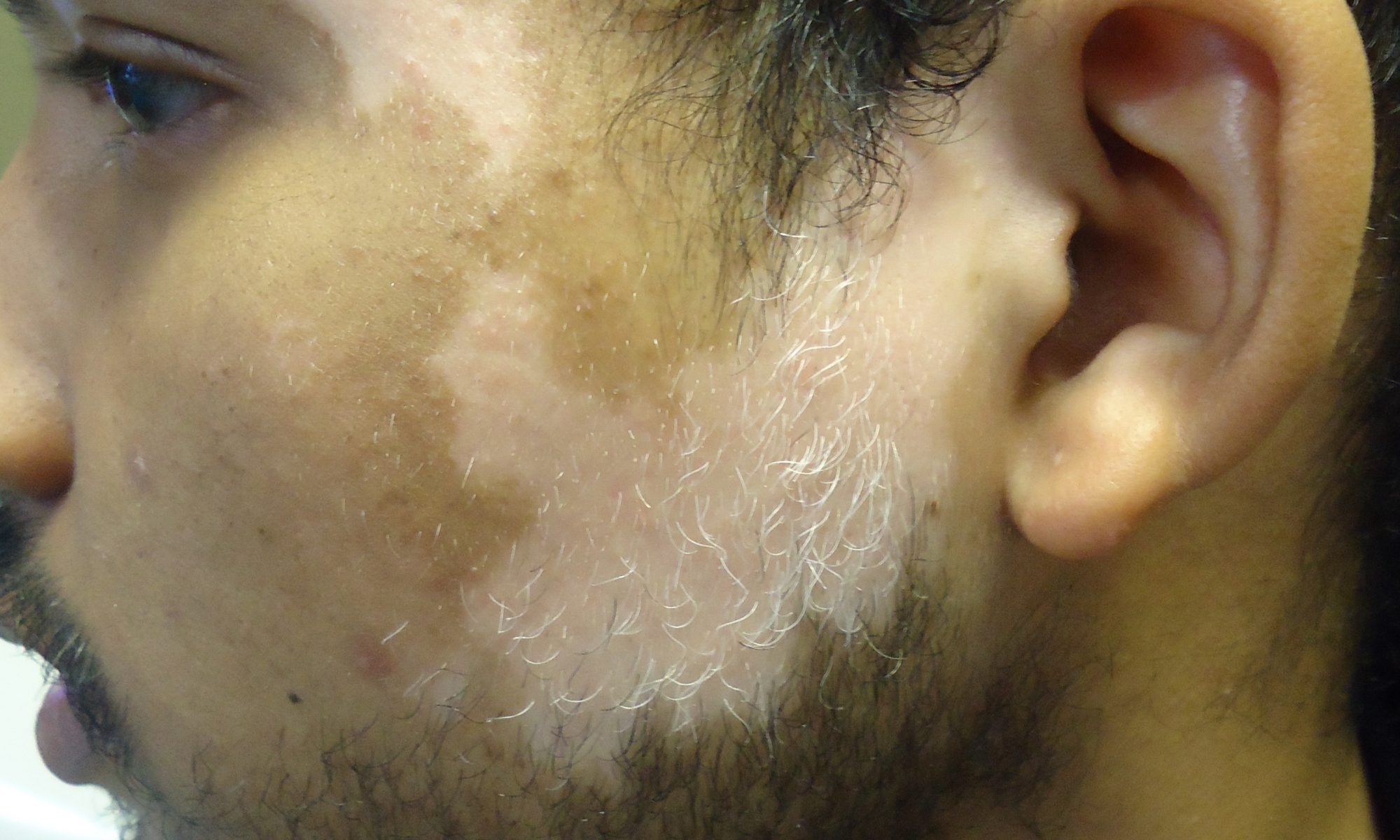
Vitiligo is an acquired pigmentation disorder of unkown cause that is characterised by the development of white patches related to the selective loss of the cells that make melanin pigment (melanocytes). Dr Jonathan Smith discusses this misunderstood disorder.

About 1% of individuals in the USA and in Europe have vitiligo, but the prevalence ranges from less than 1 in a thousand to 8% worldwide. A recorded predominance of women reflects their greater willingness to express concern about cosmetically relevant issues. Half of all patients develop the disease before 20 years of age, a time when physical appearance is perceived as important so as to be accepted by one’s peers and to attract a life partner.

Generalised vitiligo is the most common clinical presentation and often involves the face and distal parts of the limbs i.e. exposed areas not covered by clothing. Ignorance regarding its cause has resulted in vitiligo being referred to as ‘white liver’ and acquiring the stigma of an association with alcohol abuse. In many societies it’s also perceived as being contagious and put into the same category as leprosy or sexually transmitted disease, resulting in social ostracism.

The attitude and prejudice of the ignorant also affect the psychosocial development of children at school and on the playground, as well as the chances of school and tertiary education graduates when applying for jobs.

The fact that the course of the disease is unpredictable and the response to treatment varies also causes severe psychological stress and an increased risk of developing psychological and even psychiatric disorders requiring professional treatment.

Vitiligo has a major impact on self-esteem and the perception of self, causing embarrassment, shame, insomnia and depression. There is often no correlation between the severity of the disorder and its effect on an individual’s quality of life.

Therefore, all those with vitiligo should do a quality of life assessment when first diagnosed and regularly during treatment.

As with many problems facing society, the solution to the psychosocial implications of vitiligo lies in educating the general population regarding the disorder and decreasing the misguided stigma attached to it.

Those with vitiligo should also receive psychological counselling as studies have shown that one hour of weekly cognitive behavioural therapy and coping skills training improves the quality of life, self-esteem and perceived body image profoundly.

In addition, psychological stress can influence the progression of the condition. Therefore, its treatment improves the long-term prognosis of vitiligo.

Treatment options include topical treatment and the VTRAC Excimer Lamp system at Lasermed. This is a non-invasive UV lamp for phototherapy without any photo-sensitising (reaction of skin to sunlight) of specific disorders, eg Vitiligo on white and ethnic skins of all ages. The light delivers a short wave length of UV radiation (UVB responsible for tanning) that penetrates the epidermis using a lamp on specific areas. Only the affected area gets treated with a time-controlled dose or influence.


3Mar

The importance of Vitamin A in combating photo-ageing

by Lasermed

by Dr C de Villiers

Retinoids have demonstrable efficacy in the treatment of sun-damaged skin. This group of substances comprising vitamin A and its natural and synthetic derivatives were first used in dermatology in 1943 for acne. However, since then retinoids applied to the skin have been used in treatment of various skin conditions including photo-ageing.

Photo damage of the skin occurs as a result of cumulative sun exposure over the years and is characterised by wrinkling, easy bruising, inelasticity, mottled pigmentation, roughness and enlarged skin veins. The way topical retinoids improve sun-ageing is probably by modifying cellular differentiation.

The following retinoids are of use in sun related skin ageing:
– TRETINOIN (retinoic acid) is the most potent anti-sun damage retinoid. However, it has the potential to cause skin irritation, so frequency of application needs to be adjusted according to the degree of irritation, ie only every second or third night.
– RETINOL (vitamin A alcohol) has proven anti-sun ageing effects but is less potent than tretinoin. Also, it’s less irritating. It gets converted in the skin to retinoic acid to have its effect.
– RETIALDEHYDE is metabolised in the skin to retinoic acid which is a well-known anti-ageing agent. It’s also less irritating than tretinoin. Retinaldehyde is only effective when it’s converted to retinoic acid in the skin.
– ADAPALENE is a third-generation retinoid. It’s used primarily as a treatment for acne but can be used as a second-line treatment for sun ageing in patients who don’t tolerate the abovementioned conventional retinoids.

The most common side-effects with use of retinoids on the skin are itchiness, burning, redness and peeling. This may necessitate using them less often and counteracting the irritating effects with a moisturiser. Patients using retinoids should also use sunscreens during the day as they make the skin more sun-sensitive. They shouldn’t be used during pregnancy.

Topical retinoids are very valuable agents in combatting skin ageing in particular to help improve fine wrinkles, roughness and mottled pigmentation.

PRODUCTS CONTAINING RETINOIDS AVAILABLE AT LASERMED AND DERMASHOP:
Zone: Day Cream, Night Cream, Eye Gel
Dermaquest: Essential Moisturiser, Retinol Peptide Youth Serum, Nourishing Peptide Rich, Retexture Serum
Skin Tech: Nutritive Cream
Neostrata: Renewal Cream and Retinol + NAG Complex (only available directly at Lasermed, not through Dermashop)

  • right-arrow2
  • 1
  • …
  • 37
  • 38
  • 39
  • 40
  • 41
  • …
  • 44
  • right-arrow

Date Posts

April 2026
M T W T F S S
 12345
6789101112
13141516171819
20212223242526
27282930  
« Jul    

Tags

Acne acne scars Ageing skin Alexandrite laser anti-ageing Chemical peels Dermapen fine lines and wrinkles Fractional laser Frax 1550 glycolic acid peel hair loss hyperpigmentation IPL laser hair removal Lasermed lasermedbeautifulskin Microdermabrasion Microneedling Mini Frax 1550 moisturiser pigmentation port wine stains Post-traumatic scarring Q-switched laser Q Switched ND:Yag laser Rejuvenation sagging skin skin cancer prevention Skincare skin hydration skin rejuvenation skin tightening Smoother skin solar lentigos Spider veins sunscreen sunscreen mistakes sunspots sun spots Tattoo removal Telangiectasias Utims HIFU vascular laser wrinkles

Blog Posts

Set post(s) as "Featured" to see block

Archives

  • July 2023
  • June 2023
  • May 2023
  • April 2023
  • March 2023
  • February 2023
  • January 2023
  • December 2022
  • November 2022
  • October 2022
  • September 2022
  • August 2022
  • July 2022
  • June 2022
  • May 2022
  • April 2022
  • March 2022
  • February 2022
  • January 2022
  • December 2021
  • November 2021
  • October 2021
  • September 2021
  • August 2021
  • July 2021
  • June 2021
  • May 2021
  • April 2021
  • March 2021
  • February 2021
  • January 2021
  • December 2020
  • November 2020
  • October 2020
  • September 2020
  • August 2020
  • July 2020
  • June 2020
  • May 2020
  • April 2020
  • March 2020
  • February 2020
  • January 2020
  • December 2019
  • November 2019
  • October 2019
  • September 2019
  • July 2019
  • June 2019
  • May 2019
  • April 2019
  • March 2019
  • February 2019
  • January 2019
  • December 2018
  • November 2018
  • October 2018
  • September 2018
  • August 2018
  • July 2018
  • June 2018
  • May 2018
  • April 2018
  • March 2018
  • February 2018
  • January 2018
  • November 2017
  • October 2017
  • September 2017
  • August 2017
  • July 2017
  • June 2017
  • May 2017
  • April 2017
  • March 2017
  • February 2017
  • January 2017
  • December 2016
  • November 2016
  • October 2016
  • September 2016
  • August 2016
  • July 2016
  • June 2016
  • May 2016
  • March 2016

To receive email updates, please provide us
with your email address below.

    Lasermed Tyger Valley

    • placeholder-for-map-16th Floor, Intercare Medical & Dental Centre, 43 Old Oak Road, Bellville, Cape Town
    • telephone-1+27 21 914 6006

    Lasermed City Bowl

    • placeholder-for-map-1181 Bree Street, Cape Town
    • telephone-1+27 21 424 5078
    Copyright 2023 Lasermed | All Rights Reserved | facebook-logo   instagram | Written, designed and maintained by Tomar Communications
    up-arrow-1